One of the most common missteps we see in Carlow is contractors starting earthworks without knowing whether the subgrade will turn into slurry after a week of Irish rain. The glacial till that blankets much of the county looks competent when dry, but a modest increase in moisture can push it past the plastic limit overnight. Atterberg limits testing removes that guesswork. By quantifying the exact moisture contents where the soil transitions from semi-solid to plastic, and from plastic to liquid, the lab gives the design team a clear picture of how the material will behave under load and changing weather. This is not an academic exercise—on sites near the River Barrow, where groundwater sits just a metre or two below the surface, the difference between a plastic index of 12% and 22% changes the allowable bearing pressure by a factor that can make or break a shallow foundation scheme. We run the full liquid limit, plastic limit, and plasticity index suite in our ISO 17025-accredited laboratory, typically alongside a grain-size analysis so the engineer can correlate the Atterberg values with the silt and clay fraction directly.
A plasticity index above 20% in Carlow's glacial till usually signals that the soil will govern the foundation design, not the structural loads.
Methodology applied in Carlow
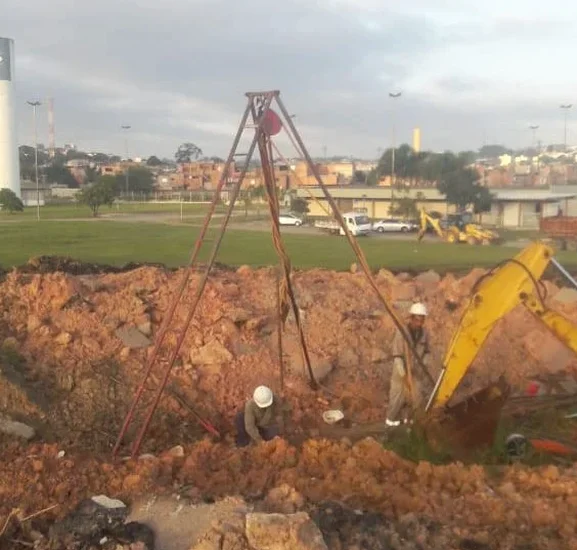
Local geotechnical conditions in Carlow
Ground conditions change noticeably between the Barrow valley floor and the drumlin hills east of the N80. Sites on the floodplain near Graiguecullen encounter soft alluvial silts with liquid limits that can exceed 55%, and those materials are prone to strength loss under cyclic loading. The till-capped drumlins further east, around Palatine and Tinryland, present a different problem: the clay fraction is lower, but the soil is fissured, and the plasticity index measured on remoulded samples often underestimates the in-situ behaviour because the fissures act as preferential drainage paths. Both scenarios carry risk. On the floodplain, an incorrectly low liquid limit leads to an overestimate of undrained shear strength. On the drumlins, ignoring fissure drainage can produce settlement predictions that look conservative on paper but are optimistic in the field. The Atterberg classification anchors both the geotechnical model and the earthworks specification—particularly the moisture-conditioning targets for compaction—so getting it wrong cascades into every downstream decision on the project.
Our services
The Atterberg limits report is rarely the end of the story. Most Carlow projects combine it with a few supporting tests to build a full geotechnical profile before the foundation design is signed off.
Consistency Classification Package
Liquid limit, plastic limit, plasticity index, and natural moisture content on the same sample—gives the liquidity index in one report so the engineer can assess whether the clay is normally consolidated or overconsolidated.
Atterberg + Particle Size Distribution Bundle
Combined BS 1377-2 testing with wet sieving and sedimentation analysis to produce the full gradation curve alongside the plasticity chart, essential for USCS classification used in most Irish ground investigation reports.
Trial Pit Sampling & Lab Programme
Our field crew logs the pit, takes disturbed bag samples at depth intervals that capture any lensing, and delivers them to the Carlow lab under chain of custody—the Atterberg data then feeds directly into the factual report.
Questions and answers
How much does Atterberg limits testing cost for a Carlow project?
For a standard set of liquid limit and plastic limit determinations on a single sample, the cost ranges from €70 to €110 depending on the number of specimens run and whether the plasticity index calculation and flow curve are included. Bulk pricing is available when multiple samples are submitted from the same site investigation.
How many samples do you need for a reliable Atterberg classification on a Carlow glacial till site?
We recommend a minimum of one sample per distinct stratum encountered in the trial pit or borehole log. On sites where the till shows visible lensing or colour banding, taking separate samples from each lens avoids averaging the plasticity index across materials with very different engineering behaviour. For a single-house foundation on a drumlin site, three samples taken at 0.5m, 1.0m, and 1.5m depth usually provide sufficient coverage.
What is the difference between the cone penetrometer method and the Casagrande cup method for liquid limit?
The cone penetrometer method defined in BS 1377-2:1990 uses an 80g, 30° cone that is released into the soil paste, and the liquid limit is the moisture content at 20mm penetration. It is the standard method in Ireland and the UK because it is operator-independent and gives reproducible results. The Casagrande cup method, still common in North America under ASTM D4318, relies on counting blows to close a groove and tends to give slightly different values for the same soil. We report cone penetrometer values unless the project specification explicitly requests the cup method.