In Carlow's varied terrain, where drumlin landscapes meet river valleys, the stability of slopes and retaining structures is not just an engineering concern—it's a fundamental requirement for safe and sustainable development. The Slopes & Walls category encompasses the comprehensive geotechnical design and analysis services needed to manage earth pressures, prevent soil movement, and create stable excavations or embankments. From residential builds on gently sloping sites to major infrastructure projects along the River Barrow, understanding the interaction between soil, water, and structures is critical. This field directly addresses the risks posed by natural slopes and the demands of constructing durable retaining solutions in a county with a rich but often challenging glacial geology.
Carlow's subsurface conditions are dominated by glacial tills, sands, and gravels deposited during the last ice age, overlying bedrock such as limestone and shale. These soils can vary dramatically over short distances, with pockets of soft alluvium along river corridors and stiffer boulder clays on higher ground. The presence of perched water tables and fluctuating groundwater levels, particularly in low-lying areas near the Barrow, adds significant complexity to any earth retention or slope design. A thorough slope stability analysis is essential to identify potential failure surfaces, whether in natural cuttings, engineered embankments, or temporary works, ensuring that the risks of landslides or rotational slips are fully mitigated before construction begins.
All geotechnical design in Carlow must comply with Irish and European standards, primarily guided by the Institution of Structural Engineers and the requirements of Eurocode 7 (IS EN 1997-1:2004), which sets out the principles for geotechnical design. This is supplemented by the Irish National Annexes that specify country-specific parameters. For retaining structures, compliance with IS EN 1992 (concrete design) and IS EN 1993 (steel design) is mandatory. The Building Control (Amendment) Regulations (BCAR) also place a legal onus on designers to certify that works are safe and compliant. Our designs rigorously adhere to these codes, ensuring that every project, from a simple gravity wall to a complex anchored system, meets the strict durability and safety requirements outlined in the Irish Building Regulations and relevant local authority planning conditions.
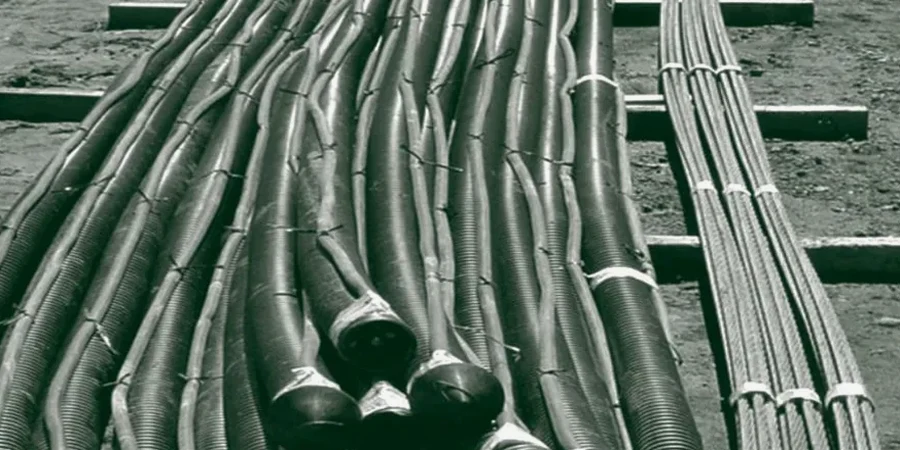
The necessity for professional slope and wall design in Carlow spans a wide array of projects. Residential developments often require retaining wall design to create level platforms on sloping sites, while commercial and agricultural buildings may need robust walls for basements or storage bays. Infrastructure schemes, such as road widening along the N80 or flood defence works for Carlow Town, demand deep excavation support and permanent earth retention systems. For situations where space is tight or loads are high, an active/passive anchor design provides a technically elegant solution, transferring tensile loads deep into competent ground to stabilise walls or resist uplift. Each project type demands a bespoke approach, balancing cost-effectiveness with long-term resilience against Carlow's specific soil and weather conditions.
Questions and answers
What is the difference between a slope stability problem and a retaining wall design issue?
Slope stability analysis assesses the risk of a natural or man-made slope failing under its own weight, considering soil strength and groundwater. Retaining wall design focuses on creating a structure to hold back soil where a vertical or near-vertical change in grade is needed. While distinct, they are linked; a failed slope might necessitate a retaining wall as a remedial measure, and a poorly drained wall can trigger a slope failure behind it.
When are ground anchors necessary for a project in Carlow?
Ground anchors become necessary when traditional retaining walls like gravity or cantilever types cannot resist the applied earth or water pressures without excessive size or cost. They are ideal for tight sites in Carlow town, for stabilising existing walls showing distress, or for deep excavations where internal bracing would obstruct construction. Anchors transfer tensile loads into stable ground well beyond the potential failure zone.
What site investigation is required before designing a retaining wall or slope?
A comprehensive site investigation is mandatory under Eurocode 7 and typically involves trial pits, boreholes, and laboratory testing to determine soil classification, shear strength, and groundwater levels. In Carlow's glacial soils, identifying the presence of soft alluvial lenses or artesian conditions is critical. This data directly informs the design parameters and the selection of the most appropriate and cost-effective earth retention system.
How do Irish regulations affect the design of slopes and walls?
Design must comply with Eurocode 7 (IS EN 1997-1) and its Irish National Annex, which provides specific partial factors for soil parameters and actions. The Building Control Regulations require detailed design certification and, for larger projects, an assigned certifier. This legal framework ensures that all permanent and temporary works are designed to a high standard of safety and durability, accounting for Ireland's climatic conditions and construction practices.