Carlow's layered development, from the medieval castle nucleus to the modern commercial parks along the N80 relief road, has left a patchwork of glacial tills and river terrace gravels beneath the town. Each phase of construction encounters different depositional material. The Barrow and Burrin rivers have sorted these sediments in complex ways. Grain size analysis is the starting point for differentiating a clean drainage blanket from a frost-susceptible silt. Our laboratory team runs the full procedure under I.S. EN ISO 17892-4. We combine sieve stacks with hydrometer readings. This dual approach captures the complete curve from coarse sand down to the clay fraction. The data feeds directly into soil classification for footings and pavement design subgrade assessment, where fines content determines long-term performance.
A single hydrometer reading at the 2-micron mark often reveals more about a Carlow site than twenty borehole logs without particle-size data.
Methodology applied in Carlow
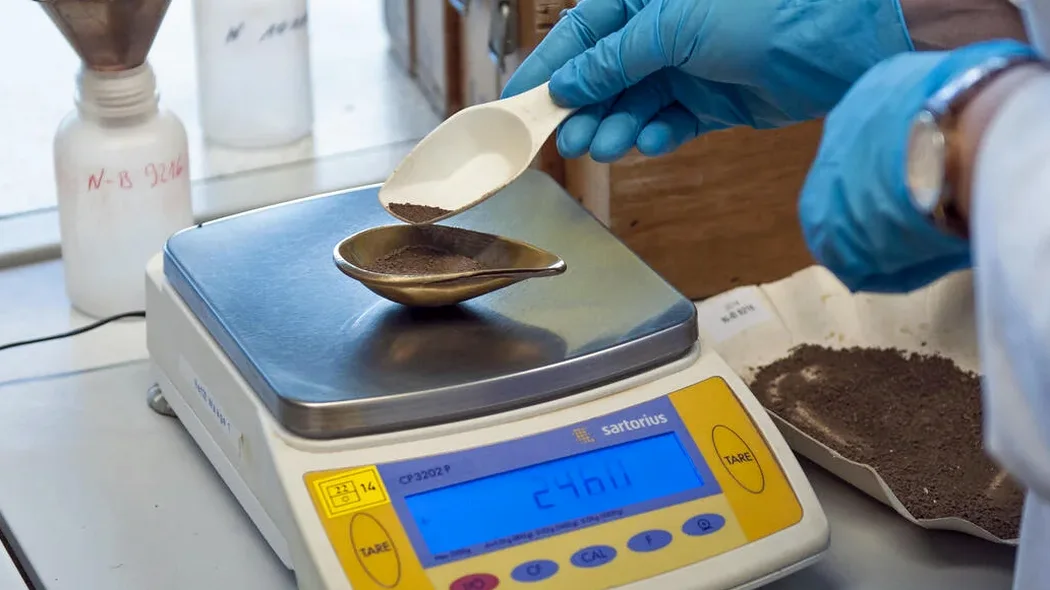
Local geotechnical conditions in Carlow
Two sites in Carlow town can look identical at ground level but behave completely differently once the lab report lands. A light industrial unit near the Fairgreen sits on well-graded outwash sands and gravels. A housing development off the Athy Road often encounters laminated silts from the Burrin floodplain. The grain size curve separates them immediately. The Fairgreen material shows a smooth S-curve across the sieve range with less than 5 percent passing the 63-micron sieve. The Athy Road silt produces a steep drop at the fine end with more than 35 percent passing. That difference dictates everything: bearing capacity, drainage design, frost protection requirements. Missing the fines content on a floodplain site leads to settlement problems and water ingress that no amount of structural reinforcement can fix. The hydrometer test provides the forensic detail that sieves alone cannot give.
Our services
Our Carlow laboratory provides three standard reporting levels for particle-size work, each tailored to a specific project stage or material type.
Full Combined Analysis (Sieve + Hydrometer)
Complete gradation curve from 75 mm down to 2 µm. Required for cohesive soils, glacial tills, and any material where the fines fraction governs engineering behaviour.
Wash Sieve Check (Sub-63 µm Content)
A rapid determination of the total percentage passing the 63-micron sieve. Useful for granular sub-base compliance testing and aggregate quality control on road projects.
PSD for Concrete Aggregate
Sieve-only analysis to I.S. EN 933-1 for coarse and fine aggregates destined for ready-mix or precast concrete supply in the Carlow-Kilkenny region.
Questions and answers
Why do I need a hydrometer test when a sieve analysis already shows the sand and gravel distribution?
Sieve analysis stops at 63 microns. Everything finer, the silt and clay fraction, passes through that last sieve and gets recorded as one number. The hydrometer test separates that fraction into silt (63 to 2 microns) and clay (below 2 microns). That distinction is critical. A soil with 30 percent silt behaves very differently from one with 30 percent clay, even though both show the same 'passing 63 µm' on a sieve report. Clay controls plasticity, shrink-swell potential, and drainage. Without the hydrometer curve you are guessing on those properties.
How much does a full grain size analysis with hydrometer cost in Carlow?
A full combined sieve and hydrometer analysis to I.S. EN ISO 17892-4 typically falls in the €110 to €160 range per sample, depending on whether the material is predominantly granular or cohesive and the number of size fractions requested. We provide a firm quote once we see the sample condition and know the required reporting turnaround.
What sample quantity do I need to send to the lab for a reliable result?
For a standard combined analysis on a soil with mixed sand and fines, a 1 kg representative sample is sufficient. If the material is predominantly gravel with cobbles, we need at least 5 kg to obtain a statistically valid coarse fraction. The sample must be sealed immediately after extraction to preserve natural moisture content. We supply sample bags and labels for site teams across County Carlow.