Carlow sits on a varied geological base where the River Barrow has carved through limestone lowlands, leaving behind a mix of alluvial gravels, glacial tills, and occasional pockets of softer sediment that can catch out an unprepared design team. When the local authority asks for a seismic site class under Eurocode 8, you need a VS30 profile that reflects what is actually under the slab, not what the desktop study assumed. It is the shear wave velocity through the upper 30 metres that dictates whether your structure falls into ground type B, C, or something trickier. We run the active MASW spread right across the footprint, capture the dispersion curve, and invert it to a stiffness profile that the structural engineer can use directly. For deeper bedrock targets or sites where space is tight, we often pair the survey with seismic refraction to nail the interface depth before running the inversion, especially where the limestone bedrock is shallow and weathered near the surface.
VS30 classification in Carlow can shift between ground type B and C within a few hundred metres, and that single letter changes the entire seismic design envelope for the structural engineer.
Methodology applied in Carlow
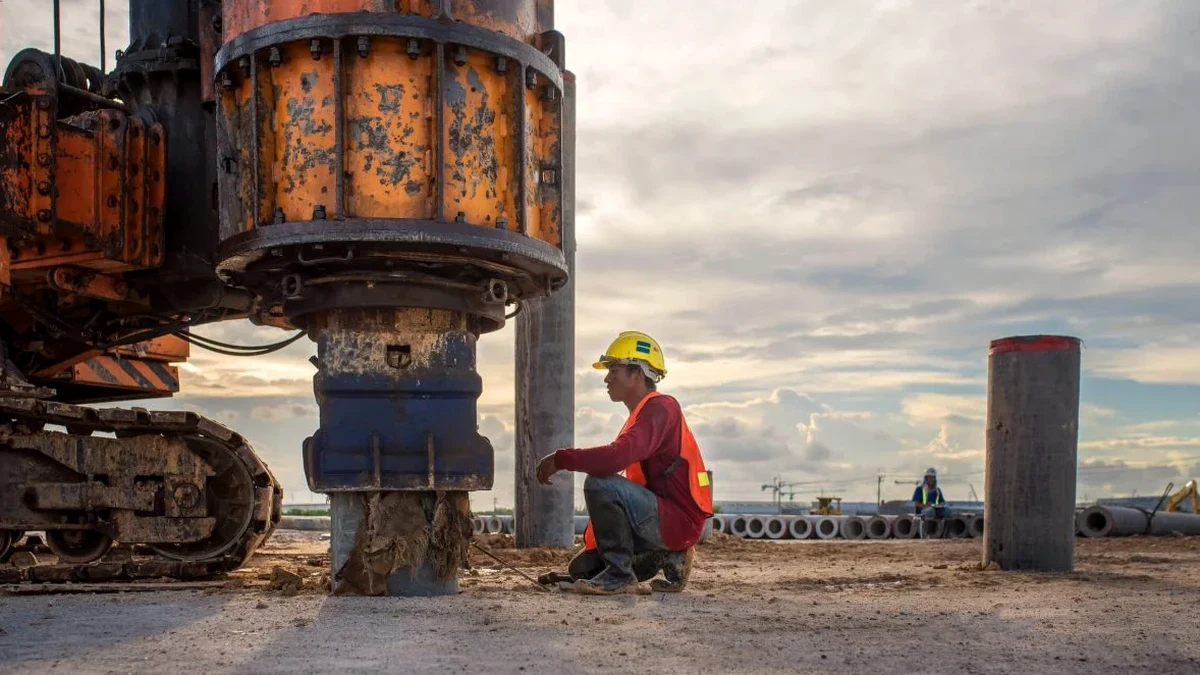
Local geotechnical conditions in Carlow
One thing we keep running into across Carlow is the assumption that a single VS30 value from a desktop map will hold across the whole site. The Geological Survey of Ireland maps are a decent starting point, but they were never intended to replace a site-specific measurement. We have picked up buried channels of soft alluvium along old Barrow tributaries that do not appear on any published map, and they drag the average shear wave velocity down enough to bump the site into a worse class. Skip the survey and you risk an over-optimistic ground type, which feeds straight into an unconservative seismic coefficient and a foundation design that underestimates the horizontal load. The planning department in Carlow County Council has been pushing back harder on seismic justification in the last few years, particularly for multi-storey residential and any building with public occupancy. A field-measured VS30 profile, signed by a competent geophysicist, shuts down that conversation before it starts and keeps the structural warranty clean.
Our services
Our Carlow MASW surveys are run as turnkey packages from mobilisation to final report, and we handle the traffic management, utility clearance, and landowner permissions so the design team can focus on the engineering. Every job includes a sanity check against local borehole logs where available.
Active MASW for VS30
Standard 46-metre spread with 2-metre geophone spacing, sledgehammer source, and full inversion to 30 metres. Delivers a site class letter and the 1D shear wave velocity profile for Eurocode 8 compliance.
Active-Passive Combined MASW
For sites where we need deeper penetration past 30 metres or where ambient noise is high. We combine the active shot with passive roadside noise or microtremor recording to extend the dispersion curve and constrain the bedrock velocity.
Crosshole or Downhole Seismic (CH/DH)
When the site already has boreholes and the client wants the highest resolution interval velocity, we run crosshole or downhole surveys with a borehole sparker and triaxial geophone array, delivering P-wave and S-wave velocity logs.
Seismic Refraction Tomography
Often paired with MASW on Carlow sites where limestone bedrock is shallow and we need a sharp image of the top-of-rock topography. The P-wave velocity model constrains the surface-wave inversion and gives the geotech a stronger interpretation.
Questions and answers
What does a MASW survey cost on a standard Carlow residential site?
For a typical single-family dwelling or small commercial plot in the Carlow area, a complete active MASW survey with VS30 classification and a signed report runs between €1,570 and €2,830 plus VAT. The exact figure depends on site access, the number of spreads we need to cover the footprint, and whether we need to bring in a weight drop for deeper penetration. We send a fixed-price quote after a desktop review of your site, so there are no surprises.
Does Carlow County Council always require a site-specific VS30 measurement?
Not for every single project, but the trend is moving that way. For buildings over two storeys, any structure with public occupancy, and most commercial developments, the planners expect a Eurocode 8 seismic justification backed by measured data rather than generic maps. We have seen conditional planning grants that explicitly require a site-specific VS30 before the commencement notice is validated, so it is worth checking early.
How long does the fieldwork take and how disruptive is it?
A single active MASW spread on a clear site takes about an hour of recording time, plus setup and pack-down. We use a sledgehammer on a plate, so there is no drilling mud, no heavy truck, and the noise is a short sharp tap every few seconds. Most neighbours do not even notice. For urban sites in Carlow town centre we work off-peak and can have the crew off site by lunchtime.
Can you combine the MASW survey with other geotechnical testing?
Yes, and we often recommend it. A MASW spread gives you the stiffness profile, but pairing it with a test pit or a dynamic cone penetration test gives you the stratigraphy and bearing capacity in the same campaign. On larger Carlow commercial sites we coordinate with the drilling crew so the geophysics and the intrusive testing tell a consistent story, and the geotechnical report is stronger for it.
What ground conditions in Carlow cause the most problems for MASW?
The main challenge is where a thin, stiff crust of desiccated till or made ground sits over much softer material. That velocity inversion can be tricky to resolve with the fundamental mode alone, and an inexperienced processor might overestimate the VS30. We run higher-mode analysis and, where the site layout allows, extend the spread to capture longer wavelengths that sample deeper, giving us a more honest stiffness profile.